The Thing You Stopped Doing Probably Knows Something You Don't

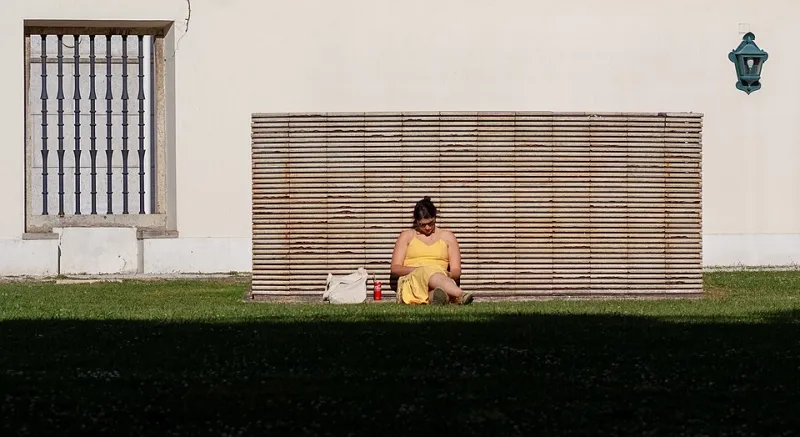
Photo: Unknown authorUnknown author, Public domain, via Wikimedia Commons
At some point, you had a thing. Maybe it was painting, or running, or playing an instrument, or writing in a journal every night before bed. Maybe it was baking elaborate things on weekends, or reading a book a week, or going to pottery classes you'd signed up for on a whim and then somehow kept going back to.
And then, at some other point — gradually or all at once — you stopped.
Life got busier. Or the thing started to feel like a chore. Or you got good enough at it to realize you'd never be that good at it, and the gap between where you were and where you wanted to be became harder to ignore. Or someone made an offhand comment. Or you just... drifted.
Most of us have at least one of these abandoned pursuits sitting somewhere in the back of our memory, occasionally surfacing when we see someone else doing it or when we're cleaning out a closet and find the watercolors we bought with real excitement years ago.
Here's what I think: those abandoned things are worth a second look. Not necessarily to pick them back up — but to understand why you put them down.
The Hobbies We Drop Are a Timeline of Who We've Been
Think of every creative or recreational interest you've had over the course of your life as a chapter marker. The childhood phase where you were obsessed with drawing. The college years when you ran competitively. The season in your late twenties when you got really into cooking elaborate dinners. The brief but genuine period when you were learning Spanish on Duolingo every single day.
Each of those things reflects something about who you were at that time — what you needed, what you were curious about, what you were reaching toward. And each time you moved on from one, it wasn't random. It was a signal about what had shifted.
Sometimes we drop hobbies because we've genuinely outgrown them — the thing served its purpose and we're ready for something new. That's not loss. That's evolution. But sometimes we abandon things not because we've moved past them, but because something got in the way — fear, comparison, a change in circumstances, a loss of confidence we never fully acknowledged.
Those two types of letting go feel very different when you're honest with yourself about which one actually happened.
The Comparison Trap That Quietly Kills Creative Pursuits
American culture has a complicated relationship with hobbies. We're not always great at doing things purely for the joy of them. There's often an unspoken expectation that if you're going to spend time on something, it should be productive — monetizable, shareable, or at minimum impressive to others.
That pressure is especially brutal for creative hobbies. The moment you post your first painting and it doesn't get the response you hoped for, or you compare your guitar playing to someone on YouTube who's been playing for fifteen years, or someone asks "are you going to do anything with that?" and you don't have a good answer — something shifts. The thing that used to feel like yours suddenly feels like a performance you're failing at.
A lot of abandoned hobbies have that story underneath them. Not "I didn't enjoy it anymore" but "I stopped being able to separate my enjoyment from my judgment of how I was doing."
If that resonates, it's worth sitting with. Because the joy was real. It didn't disappear — it just got buried under something else.
What Letting Go Tells You About Your Values Now
Not every abandoned hobby deserves to be rekindled. Some things we did at one point in our lives genuinely don't fit who we are anymore — and that's fine. Growth means change, and change means some things get left behind.
But here's the useful question: what did that hobby give you when it was active in your life? Was it solitude? Flow state? A sense of making something with your hands? Connection to a community? Physical challenge? Creative expression?
Because even if the specific activity no longer fits, the need it was meeting probably didn't go away. It just went unmet — or you started meeting it in other ways without realizing that's what you were doing.
When I think about the things I've dropped over the years, the most honest version of the story is usually that I found a different container for the same need. Sometimes that new container is better. Sometimes it's just easier, which isn't the same thing.
When It's Actually Worth Going Back
There are a few signals that an abandoned hobby might be worth revisiting:
You think about it more than you'd expect. If something keeps surfacing — in conversations, in what you save online, in moments of daydreaming — that's not nothing. That's a pull worth paying attention to.
You stopped because of external pressure, not internal change. If you quit because someone made you feel like you weren't good enough, or because life circumstances temporarily made it impossible, that's a different story than genuinely growing out of something.
You miss the person you were when you did it. Sometimes we don't miss the activity as much as we miss the version of ourselves who had time and permission for it. That's worth unpacking, because you can usually find a way back to that version of yourself — even if the activity itself looks different now.
You Don't Have to Be Good at It to Need It
This is maybe the most important thing: the hobbies worth returning to aren't necessarily the ones you're talented at. They're the ones that give you something you can't get anywhere else — a particular kind of focus, or freedom, or feeling.
The watercolors in the closet don't need to produce anything impressive. The journal doesn't need to be readable by anyone but you. The guitar doesn't need to lead anywhere.
Some things are just worth doing because they make you more fully yourself. And honestly? That might be the most productive thing you could do with a Tuesday evening.