Fewer, Better: The Case for Editing Your Life Like a Creative Director

There's a particular kind of exhaustion that comes not from doing too much, but from holding onto too much. Too many obligations. Too many group chats. Too many dresses you bought for a version of yourself you were auditioning for. Sound familiar?
I've been thinking a lot lately about what I call the slow edit — and no, it's not a new capsule wardrobe challenge or a 30-day declutter program you'll abandon by February. It's something quieter and, honestly, more radical than that. It's the ongoing, intentional practice of asking yourself: does this still belong in my life? And then having the guts to answer honestly.
This isn't minimalism as an aesthetic. It's minimalism as an act of self-knowledge.
Why We Accumulate in the First Place
American culture is relentlessly additive. More followers, more options, more productivity hacks, more things to watch, more people to keep up with. We are marketed to constantly, and not just by brands — by the idea that a fuller life is a better one. That saying yes is generous. That keeping the door open is wise.
But here's what nobody tells you: accumulation is often just avoidance in disguise. We hold onto the blazer we never wear because returning it feels like admitting we made a mistake. We keep saying yes to plans we dread because canceling feels rude. We follow accounts that make us feel vaguely bad about ourselves because unfollowing feels petty.
None of that is wisdom. It's just noise we've learned to call politeness.
The slow edit is the antidote. And it starts with getting very clear on who you actually are — not who you're trying to become, not who you were three years ago, not who your mom or your college roommate or your LinkedIn network expects you to be. You, right now.
Start With Your Wardrobe (But Don't Stop There)
The closet is the easiest place to begin because it's tangible. You can hold something in your hands and ask, honestly: when did I last reach for this? Does wearing it make me feel like myself?
But here's where the slow edit differs from a standard purge: you don't do it all in one frantic Saturday afternoon. You do it slowly, deliberately, over weeks. You sit with things. You notice what you keep reaching for and what you keep skipping over. You let the closet tell you who you are rather than forcing it to reflect who you think you should be.
Once you've done it with clothes, though, the practice starts to bleed into everything else — in the best way.
Your social circle. This one's uncomfortable, but necessary. Not every relationship deserves the same level of energy. Some friendships are genuinely nourishing; others are just familiar. Familiarity is not the same as alignment. You don't have to dramatically cut anyone off — the slow edit is rarely that dramatic. But you can quietly stop over-investing in connections that consistently leave you feeling depleted.
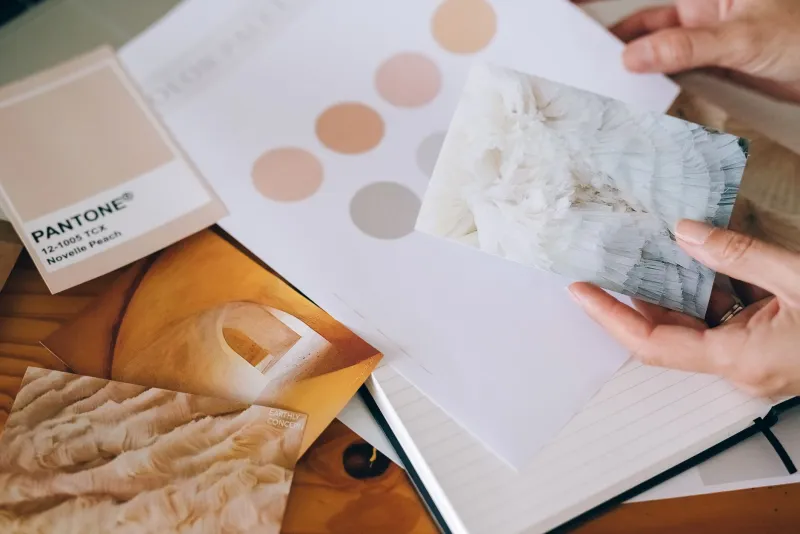
Your commitments. How many things are on your plate right now because you couldn't figure out how to say no? The slow edit asks you to audit your calendar with the same critical eye you'd bring to a mood board. Does this commitment reflect my actual priorities? Or did I say yes because I was afraid of disappointing someone?
Your digital spaces. Your feed is an environment, and environments shape your thinking. If your social media diet is full of content that makes you feel behind, inadequate, or like you're constantly playing catch-up, that's not inspiration — that's low-grade stress you've normalized. Unfollow freely. Mute without guilt. Curate your digital world the same way you'd curate your physical one.
The Permission Slip You've Been Waiting For
Here's the thing nobody says out loud: you are allowed to want less. You are allowed to have a smaller wardrobe, a tighter inner circle, a quieter calendar, and a more selective feed — and none of that makes you antisocial, boring, or ungrateful. It makes you intentional.
In a culture that rewards hustle and accumulation, choosing less is genuinely countercultural. It requires a kind of confidence that most of us weren't taught to have — the confidence to say, I know what I actually want, and I'm not interested in performing anything else.
That's not deprivation. That's power.
How to Actually Start (Without Overwhelming Yourself)
If you're ready to try the slow edit, here are a few places to begin — gently, without pressure:
-
Pick one drawer. Not the whole closet. One drawer. Go through it slowly and notice what you feel when you touch each item. Keep what feels right. Let go of what doesn't.
-
Do a 15-minute calendar audit. Look at your next two weeks. Identify one commitment that doesn't align with what matters to you most right now. See if there's a way to gracefully step back.
-
Spend one week noticing how you feel after consuming content. Don't change anything yet — just observe. Which accounts leave you feeling energized? Which ones leave you feeling flat? Let that data guide your next unfollow session.
-
Have one honest conversation with yourself about a relationship. Not to blow anything up — just to get clear. Is this friendship reciprocal? Does this person know the real me? Am I showing up authentically here?
The slow edit isn't a one-time project. It's a practice — something you return to again and again as you grow and change. Because who you are at 25 is not who you'll be at 32, and your life should have room to reflect that evolution.
Less Clutter, More Clarity
I think about creative directors a lot when I think about this practice. The best ones aren't the ones who try to include everything — they're the ones who know exactly what to leave out. The restraint is the point. The white space is what makes the design breathe.
Your life can work the same way. When you stop filling every corner with things, people, and commitments that don't genuinely fit, you create room for what actually does. And that clarity? It shows. In the way you carry yourself, in the decisions you make, in the energy you bring to the things and people you've chosen to keep.
That's the real power move. Not doing more. Doing right.
So the next time you're tempted to add something — a new obligation, a new purchase, a new person to keep up with — pause for just a second and ask yourself: is this an addition, or is it just more noise?
You already know the answer. The slow edit is just learning to trust it.