Rest Is Not a Reward: How American Women Are Rewriting the Rules of Success
The Burnout That Changed Everything
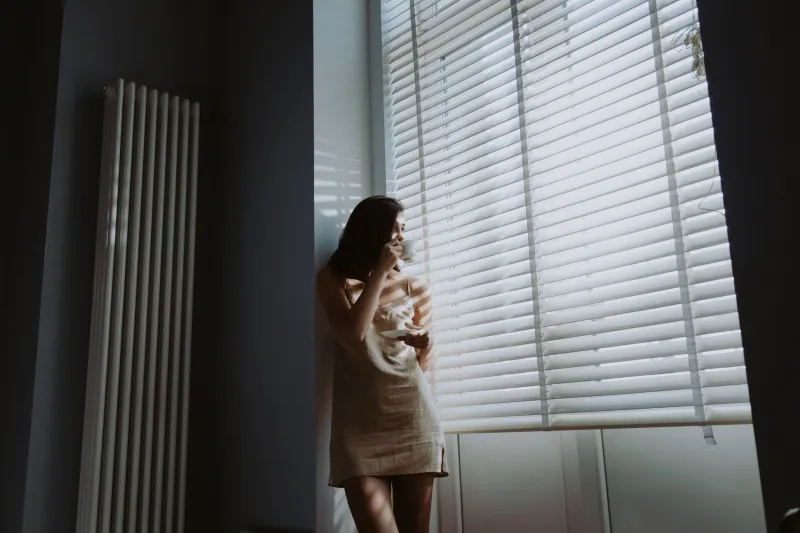
Sarah, 31, was a project manager at a mid-size tech company in Austin when she hit what she describes as "the wall." Not a bad week. Not a stressful quarter. A full, total shutdown — the kind where you're sitting in a meeting and you genuinely cannot remember why any of it matters.
"I had done everything right," she told me. "Good job, apartment I was proud of, always busy, always productive. And I was miserable. Like, deeply miserable. And I couldn't tell anyone because from the outside, I was crushing it."
She's not alone. Not even close.
Across the US, a quiet but significant cultural shift is underway — one that's showing up in therapy waiting rooms, in resignation letters, in TikTok videos with millions of views, and in the way a growing number of women are choosing to structure their days. It goes by a few names — soft life, slow living, intentional rest — but the throughline is the same: a deliberate rejection of the idea that your worth is measured by your output.
Where Did "Soft Life" Come From?
The term "soft life" has roots in Nigerian pop culture, where it was originally used to describe a life of ease, pleasure, and financial comfort — typically aspired to by women who had worked hard enough to enjoy the fruits of it. By the time it migrated to American social media, it had evolved into something broader and more nuanced: a philosophy of prioritizing comfort, peace, and joy as active choices rather than passive rewards.
On TikTok and Instagram, the soft life aesthetic often looks like slow mornings, beautiful meals, linen sheets, and long walks. But reducing it to an aesthetic misses the point — and frankly, it's the kind of oversimplification that gets the movement dismissed as frivolous.
The real substance of the soft life movement isn't about looking relaxed. It's about actually being at peace with your choices, your pace, and your definition of enough.
The Data Behind the Vibe Shift
This isn't just an online phenomenon. The numbers back it up.
A 2024 Gallup report found that employee engagement among women in the US had dropped to its lowest point in over a decade, with younger women leading the decline. A separate study from the American Psychological Association found that Gen Z women reported higher stress levels than any other demographic — consistently, year over year.
At the same time, the number of women voluntarily leaving the workforce, negotiating reduced hours, or pivoting to freelance and self-directed work has continued to climb. The pandemic cracked something open, and many women decided they didn't want to seal it back up.
"We were sold a version of 'having it all' that was basically just doing everything," says Dr. Renata Okafor, a wellness psychologist based in Chicago who works primarily with millennial women. "The soft life movement is, in part, a correction. Women are asking: having it all for whom? At what cost?"
What It Actually Looks Like Day-to-Day
Here's what I want to be clear about: choosing a softer life doesn't mean choosing a smaller one. The women I've spoken with who identify with this movement aren't retreating from ambition. They're redirecting it.
Take Maya, 28, a graphic designer in Brooklyn who left her agency job in 2023 to go freelance. She works fewer hours now than she ever did in-house — but she's more intentional about which projects she takes, she protects her mornings fiercely, and she's started saying no to things that drain her without guilt.
"People assume I'm less serious about my career," she said. "But I'm more serious. I just refuse to be serious at the expense of my actual life."
Or Priya, 34, a nurse in Atlanta who started what she calls "micro-rest practices" — fifteen-minute breaks in her car before she enters her home after a shift, a no-phone Sunday morning, a standing coffee date with herself every Friday. Nothing dramatic. But intentional.
"Rest used to feel like something I'd earned," she explained. "Now I treat it like a non-negotiable. Like brushing my teeth. You don't earn the right to brush your teeth."
The Nuance Nobody Talks About
It would be dishonest to write about the soft life movement without acknowledging its complications.
For many women — particularly women of color, single mothers, and those without financial cushions — opting out of the hustle isn't a lifestyle choice. It's not available. The soft life, as it's often presented online, can look very much like a privilege — all linen tablecloths and pottery classes and working from a light-filled home office.
That's a real tension, and it deserves to be named.
But the women most loudly articulating this movement are also, often, the ones who have the least margin for error — who are exhausted precisely because the system was never designed with them in mind. The soft life philosophy, at its most expansive, isn't about aesthetics or affluence. It's about the radical act of insisting that your peace matters. That your rest is legitimate. That joy is not something you have to justify.
That's a message that lands differently depending on your circumstances — but it's not a message without value for anyone.
Redefining Success in 2025
We're at a genuinely interesting cultural moment. The old scripts — climb the ladder, outwork everyone, sleep when you're dead — are losing their grip. Not just because women are tired (though they are), but because the promised payoff of all that grinding increasingly hasn't materialized.
The generation that was told to lean in watched their mentors burn out. The women who sacrificed everything for the corner office discovered the corner office didn't fix the thing that was broken. And so the question shifted: instead of asking "how do I succeed?" more women are asking "what does success actually feel like — in my body, in my relationships, in my day?"
That question is uncomfortable. It doesn't have a clean answer. But it's the right one.
For me, building this space — this little corner of the internet where we talk honestly about life and style and everything tangled up in between — has always been about that question. What does a life that actually feels good look like? Not perfect. Not impressive. Good.
I don't think rest is a reward. I think it's a right. And I think more and more American women are starting to agree.
Small Ways to Start Living Softer (Without Blowing Up Your Life)
You don't have to quit your job or move to the countryside to start shifting your relationship with rest and pace. Here are a few places to begin:
- Audit your "shoulds." For one week, every time you do something because you feel like you should, write it down. At the end of the week, ask which of those things actually align with what you value.
- Protect one hour. Just one. Make it yours — no productivity, no scrolling, no optimizing. Do something that has no outcome.
- Let rest be boring. Not a spa day. Not a self-care routine. Just stillness. That's where the recalibration actually happens.
- Say no to one thing this week that you would have previously said yes to out of guilt or habit. Notice how that feels.
The soft life isn't a destination. It's a direction. And the first step is simply deciding that your peace is worth moving toward.