Stop Chasing Trends — Here's How to Build a Visual Identity That's Genuinely Yours
The Moment I Realized My Style Wasn't Actually Mine
A few years ago, I did something that felt a little embarrassing at the time: I laid every single item of clothing I owned out on my bed and asked myself, honestly, which pieces I had bought because I loved them — and which ones I'd bought because I'd seen them on someone else first.
The answer was humbling. A good chunk of my wardrobe was basically a mood board of other people's personalities. There was the oversized blazer I'd bought after a scroll session gone wrong, the neutral linen sets that felt very "aesthetic" in theory but left me cold every time I actually put them on. I wasn't dressing like Livia. I was dressing like a collage of everyone I'd been admiring that week.
That moment cracked something open for me — and it's what eventually became the foundation of how I think about personal style, home design, and even my online presence. Building a personal aesthetic isn't about finding the right trend. It's about excavating what was already there.
What a Personal Aesthetic Actually Is (And Isn't)
Let's clear something up right away. A personal aesthetic isn't a color palette you pick from a quiz. It's not a single word like "cottagecore" or "clean girl" that you slap onto your identity and call it a day. Those labels can be fun reference points, sure, but they're starting places — not destinations.
A real personal aesthetic is the thread that runs through all of it: the way you arrange your bookshelf, the textures you gravitate toward in a store without thinking, the lighting you prefer in a room, the images that make you stop mid-scroll because something about them just gets you. It's less about what looks good and more about what feels right — consistently, across every corner of your life.
The women I find most compelling aren't the ones who look like they stepped out of a catalog. They're the ones whose style tells you something true about who they are.
Step One: Go Digging Before You Go Shopping
The worst thing you can do is try to build an aesthetic by buying your way into one. Before you spend a single dollar, spend some time with yourself.
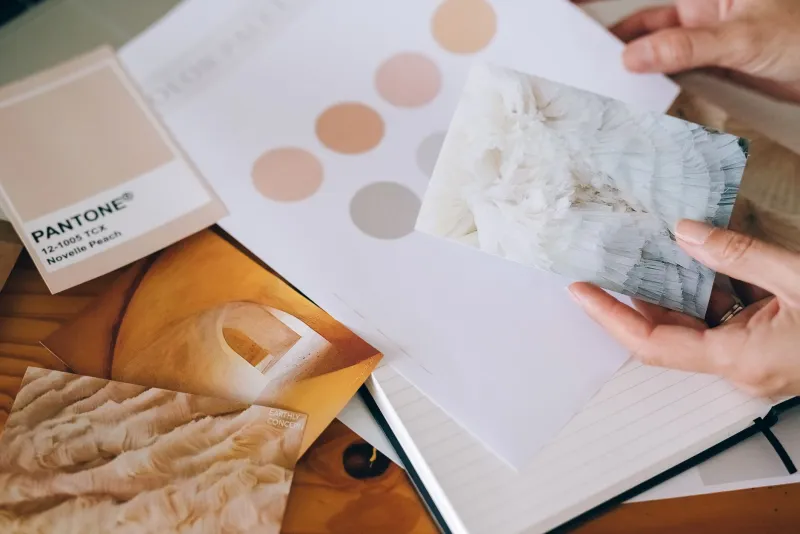
Pull up your camera roll and look — really look — at the photos you've saved over the past year. Not just fashion content. Architecture, food, art, travel, interiors, nature. What keeps showing up? What colors, textures, moods, and compositions appear again and again?
Do the same thing with your most-loved possessions. Not the things you think you should love — the ones you actually reach for, wear, use, display. Those objects are data points. They're telling you something.
I did this exercise and discovered that I am, apparently, deeply obsessed with warm terracotta tones, natural materials, anything that looks slightly imperfect or handmade, and spaces that feel like they have a story. That's not a trend — that's me. And once I saw it clearly, everything else got so much easier.
Step Two: Identify Your Non-Negotiables
Every strong personal aesthetic has a few anchoring principles — things that are just off the table, no matter what's trending. Mine include: nothing that feels stiff or fussy, no cold or sterile environments, and no "matchy-matchy" outfits that look like they were assembled by algorithm.
Yours might be totally different. Maybe you know you'll never be a minimalist, no matter how many times you try. Maybe bold prints are non-negotiable, or maybe you're committed to a specific color family that just makes you feel like yourself. Whatever those things are, write them down. Literally. Put them somewhere you'll see them before you shop, before you redecorate, before you post.
These non-negotiables become your filter — and they save you from a lot of expensive mistakes.
Step Three: Extend It Everywhere (Gradually)
Here's where it gets really interesting. Once you've got a handle on your visual identity, you start to notice how it can — and should — extend beyond your closet.
Your home is just your wardrobe for your space. The same principles that guide how you dress can guide how you decorate. If you love layering textures in your outfits, you'll probably love layered textiles in your living room. If you prefer clean lines and breathing room in what you wear, a spare, uncluttered home might feel like relief.
Your online presence is the same deal. The photos you share, the way you caption them, the rhythm of your content — it should all feel like it came from the same person. Not because you're performing consistency, but because you actually are consistent, once you've done the work of figuring out who you are.
This doesn't happen overnight, and it doesn't have to. Start with one corner — literally one corner of your bedroom, or one section of your wardrobe — and let it ripple outward from there.
The Trap of the "Aesthetic Overhaul"
I want to be honest with you about something: the internet loves to sell the idea of the total transformation. The before-and-after. The capsule wardrobe that changes your life in a weekend. The apartment makeover that makes everything click.
That's not really how this works.
Building a personal aesthetic is a slow, iterative, occasionally messy process. You'll buy something that seems right and realize it isn't. You'll go through phases. You'll get influenced by a trip you took or a book you read or a season of your life, and your aesthetic will shift a little — and that's completely fine. A living, breathing personal style is supposed to evolve.
The goal isn't to arrive at some fixed, perfect version of yourself. The goal is to get better and better at recognizing what genuinely resonates with you — so that your choices, more often than not, feel like you made them.
A Few Practical Places to Start
If you're feeling overwhelmed and want something concrete to do today, here are a few low-stakes starting points:
- Create a private Pinterest board with zero rules. Save anything that makes you feel something — not just things you'd actually buy or wear. Look at it after a week and find the patterns.
- Do a "joy audit" of one room in your home. Remove anything that doesn't make you feel good when you look at it, even temporarily. Notice how the space changes.
- Wear something you already own that feels deeply like you — not trendy, just you — and pay attention to how that feels differently than wearing something you bought out of obligation.
None of these things cost money. They cost attention. And honestly? That's the whole point.
Your aesthetic is already in there. You're just learning to listen to it.