You're Not Bored Because Life Is Boring — You're Bored Because You Stopped Noticing It

At some point, the weeks start to blur. Monday looks like Thursday. Your coffee tastes like background noise. You scroll for twenty minutes and put your phone down having absorbed absolutely nothing. You're not unhappy exactly — you're just... flat. Underwhelmed by your own existence.
And the instinct, almost every time, is to think: I need to change something big. New city. New job. New relationship. New something.
But what if the flatness isn't about what's missing from your life? What if it's about how you're paying attention to what's already there?
Busy Is Not the Same as Engaged
We live in a culture that treats busyness like a personality trait. Being slammed is almost a status symbol — proof that you matter, that you're needed, that you're doing something with your time. And yet somehow, being relentlessly busy is one of the fastest routes to feeling completely numb to your own life.
Busyness is movement. Engagement is connection. And those are not the same thing.
You can fill every hour of your week — workouts, happy hours, work deadlines, errands, scroll sessions, social obligations — and still feel like you haven't actually experienced any of it. Because you were present in body and absent in attention. You were going through the motions at speed.
Boredom, in that context, isn't a lack of stimulation. It's a lack of contact. You've been grazing the surface of your own life instead of sinking into it.
The Sensory Details You've Stopped Registering
Here's a small experiment. Think about your morning routine. Can you actually describe what your coffee tastes like right now? Not in a general sense — specifically. Is it bitter? Slightly sweet? Does it have that particular richness on the back of your tongue that you used to notice when you first got into specialty coffee?
Most of us can't answer that anymore. We drink the coffee while looking at our phones. We shower while mentally rehearsing conversations. We commute while listening to something we're not really hearing.
The sensory texture of daily life — the warmth of sunlight through a window at a specific time of day, the particular way a linen shirt feels different from cotton, the sound of a city block at 7 a.m. versus 7 p.m. — all of it fades into static when we stop tuning in.
And that static is what boredom actually is. It's not the absence of interesting things. It's the absence of your own attention.
Small Shifts That Actually Change Everything
The good news is that the antidote to this kind of boredom isn't a life overhaul. It's a series of small, deliberate re-engagements with what's already in front of you.
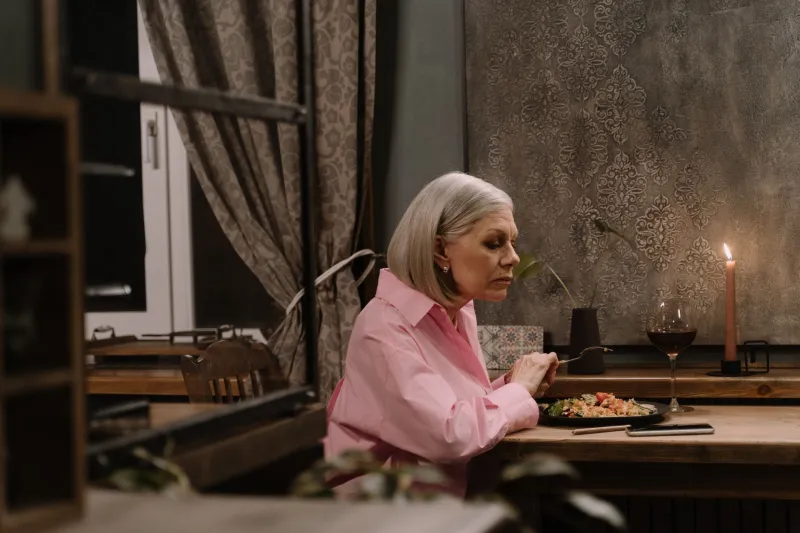
Change one sensory detail. Light a candle during your work-from-home day instead of sitting under fluorescent overhead lights. Buy a different roast of coffee and actually taste it. Put on music you haven't heard in years while you cook dinner. One new sensory input can crack open attention in a way that feels almost disproportionately powerful.
Have a conversation you actually mean. Not small talk, not catching up — an actual conversation where you ask something you're genuinely curious about and then listen to the answer without formulating your response. Real conversations are one of the most underrated antidotes to monotony because they're genuinely unpredictable.
Slow down one thing you always rush. Eat lunch without your phone. Take a walk with no destination and no podcast. Spend five extra minutes in a bookstore without buying anything. Rushing is how we turn experience into transaction. Slowing down is how we turn it back into experience.
Notice transitions. The moment between work and home. The few minutes before sleep. The walk from your car to the coffee shop door. These micro-transitions are where a lot of life actually lives, and we almost never pay attention to them.
Why We Reach for Novelty When We Actually Need Depth
It's worth asking why our first instinct is always to add or change rather than to deepen. Part of it is American culture — we're wired toward more, new, better, upgrade. The idea that what you need might already be present, just underexperienced, runs counter to basically every marketing message we've ever received.
But there's also something psychologically true here: novelty is easy. A new experience grabs attention automatically. You don't have to work to be present at a concert you've been looking forward to for months. The effort comes in being present for a regular Tuesday.
And yet Tuesday is most of your life. Tuesday is where your actual experience of being alive largely happens. If Tuesday is just something to get through on the way to the weekend, you're effectively outsourcing most of your existence.
Getting Back to Your Own Life
I think about this a lot in the context of building a life that actually feels like mine — not a life that looks good from the outside or checks the right boxes, but one I'm genuinely inhabiting. And the honest truth is that the times I've felt most alive haven't been the big moments. They've been the small ones I was actually present for.
A specific conversation at a dinner table where everyone was laughing. The way a neighborhood looks at golden hour when you slow down enough to notice it. The satisfaction of finishing something you made with your hands.
Those moments aren't rare. They're available constantly. The only variable is whether you're paying attention.
Boredom is feedback. It's your life asking you to show up for it more fully. Not to change it — just to actually be in it.
That's a much more manageable ask than moving to a new city. Start there.