The Mess You're Hiding Is the Most Honest Thing About You
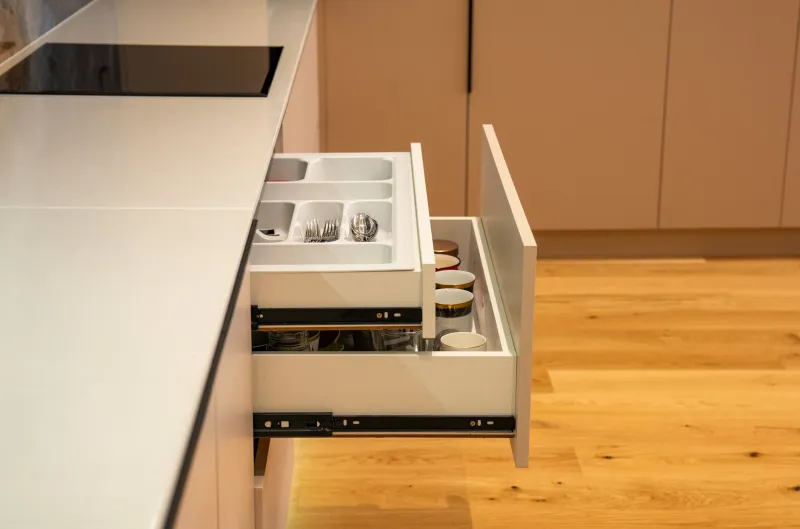
Let's be real for a second. Most of us have a version of our home we'd photograph and a version we'd never let anyone see. There's the living room we fluff before company comes over, and then there's the cabinet under the bathroom sink — the one with the expired cough syrup, three broken hair clips, and a half-empty bottle of something you bought in 2019.
Here's the thing nobody talks about: the second one? That's the real you.
Not in a shameful way. Not in a you need to get your life together way. But in a deeply revealing, actually useful way. Because the spaces you hide from tend to hold exactly the things you haven't been ready to deal with — and that says a lot more about your relationship with yourself than any curated shelfie ever could.
The Instagram Aesthetic Is a Performance (And That's Okay)
I'm not here to trash the art of a well-styled corner. I love a good throw pillow moment as much as anyone. But let's acknowledge what it is: a presentation. A highlight reel. A carefully chosen slice of how we want to be perceived.
There's nothing wrong with that. We all do it. But when the gap between what we show and what we hide becomes enormous — when the junk drawer is basically a trauma response and the guest bathroom cabinet is a no-fly zone — that gap starts to cost us something.
It costs us energy. Mental real estate. The low-grade anxiety of knowing that chaos is lurking two feet behind a closed door.
And more than that, it costs us the chance to actually understand ourselves.
What Hidden Spaces Actually Reveal
Think about the last time you opened your junk drawer. Really opened it, not just jammed something in and shoved it shut. What's in there?
For most people, it's a graveyard of indecision. Things you didn't know what to do with. Things you kept just in case. Things that belong somewhere else but you haven't figured out where. Things you should have thrown away two years ago but couldn't quite bring yourself to.
That's not a drawer problem. That's a decision-making pattern showing up in physical form.
The back of your closet — the stuff you push to the far left and never look at — that's avoidance. Those are the items attached to a version of yourself you're not sure you're done with yet. The dress from a relationship that ended badly. The blazer from a job you hated. The shoes you bought during a phase you're slightly embarrassed about now.
The under-sink cabinet with its tangle of cleaning products and mystery sprays? That's usually anxiety about waste, or difficulty finishing things, or just the accumulated evidence of optimism — you intended to use all of it.
None of this is a moral failing. It's just data.
Why Organizing These Spaces Is Actually a Values Exercise
Here's where it gets interesting. When you actually go through the hidden places — really go through them, not just reorganize the chaos — you're forced to make decisions you've been postponing.
Do I keep this? Do I need this? Does this reflect who I am now or who I used to be?
Those questions sound like they're about objects. They're not. They're about identity. They're about the gap between the life you're living and the life you actually want.
I went through my own junk drawer a while back and found three notebooks I'd never written a single word in, a charger for a phone I haven't owned in four years, and approximately forty-seven rubber bands. What I realized: I had a habit of buying things for a future version of myself and never actually becoming her. The notebooks were for the journaling habit I kept meaning to start. The charger was for a backup phone I was going to set up eventually.
That was genuinely useful information. More useful than any personality quiz I've ever taken.
The Practice of Honest Editing
You don't have to do a full Marie Kondo on your life this weekend. But I'd invite you to pick one hidden space — just one — and spend twenty minutes with it.
Not to make it Instagram-worthy. Not to buy matching bins and label everything (though honestly, same). Just to look at what's actually there and ask yourself why.
Why did you keep this? What were you afraid of if you let it go? What does having it say about what you thought you'd need or who you thought you'd be?
You might be surprised at what comes up. Not just about your stuff — about your patterns. Your relationship with scarcity. Your attachment to past versions of yourself. Your tendency to defer decisions until they pile up into something that feels impossible.
Those are the conversations worth having.
The Hidden Spaces Are Where the Growth Is
The most intentional people I know — the ones who seem to move through life with a kind of quiet clarity — aren't necessarily the ones with the most beautiful homes. They're the ones who've done the work in the places nobody sees.
They've gone through the drawer. They've made the decision about the dress. They've thrown away the charger.
Not because neatness is a virtue, but because they've stopped letting the hidden places drain them. They've stopped carrying the weight of deferred decisions and accumulated avoidance.
Your curated spaces show people who you want to be. Your hidden spaces show you who you actually are. And closing that gap — getting honest about what you're holding onto and why — that's some of the most real personal work you'll ever do.
It just happens to look like cleaning out a cabinet.
Start there.