Choosing Ease Isn't Giving Up — It's the Bravest Thing You Can Do

Choosing Ease Isn't Giving Up — It's the Bravest Thing You Can Do
Somewhere between your third consecutive 60-hour workweek and the moment you caught yourself apologizing for taking a full lunch break, American hustle culture got its hooks into you. And honestly? Same. There's something deeply embedded in the way we — particularly women in this country — have been taught to equate exhaustion with worth. If you're not grinding, you're not serious. If you're not stressed, you must not care enough.
Enter the soft life. And with it, a wave of judgment that says choosing it means you've somehow tapped out.
I'd like to respectfully push back on that.
What the Soft Life Actually Is (Hint: It's Not Brunch Every Day)
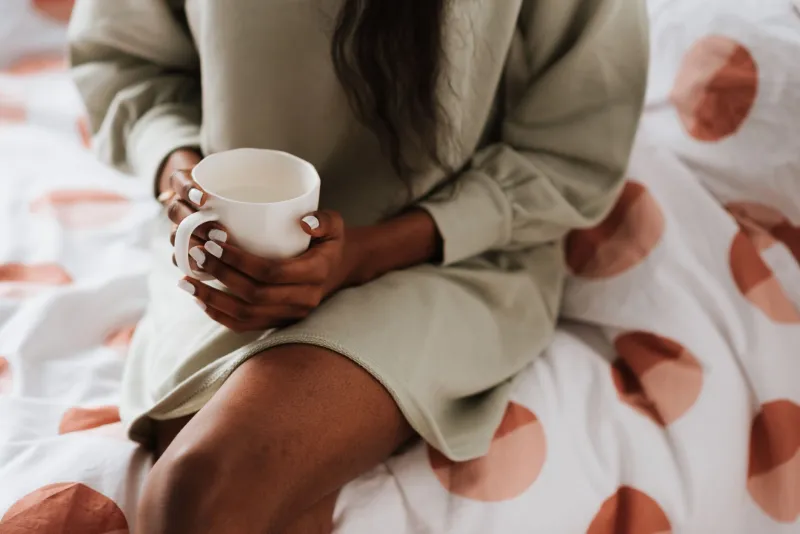
The phrase gets thrown around a lot on TikTok and Instagram, usually alongside aesthetically dreamy visuals — silk pillowcases, slow mornings, flowers on a kitchen table. And look, I'm not mad at any of that. But the visual shorthand has flattened something that's actually pretty layered.
At its core, the soft life is a philosophy of intentional ease. It's the conscious decision to stop organizing your entire existence around productivity and start making room for pleasure, rest, and emotional steadiness. It's not about avoiding responsibility. It's about refusing to accept suffering as a prerequisite for success.
For many Black women, who have been credited with originating and popularizing the term, the soft life is explicitly a rejection of the Strong Black Woman archetype — the cultural expectation that they should be endlessly resilient, self-sacrificing, and unbothered by hardship. Choosing softness in that context isn't passive. It's a full-on reclamation.
But the conversation has expanded, and women across communities are finding their own version of this reframe. What they share is a growing refusal to perform busyness as a personality trait.
Why American Culture Specifically Has a Problem With Women Resting
Here's the thing that gets me: the guilt. Not just the external judgment, but the internal kind. The way you feel vaguely wrong for taking a nap, for leaving work at 5pm, for not having a side hustle, for actually enjoying your weekend without "being productive."
That guilt isn't accidental. It's been cultivated.
American culture has a long, complicated relationship with labor and moral virtue — work hard enough and you deserve good things, the story goes. But that framework has never applied equally across gender lines. Women have historically been expected to work — both inside and outside the home — and then also be grateful for the opportunity to do so. Rest, for women, has often been framed as either a reward to be earned or a luxury to be ashamed of.
Add in the girlboss era of the 2010s, which told women that the path to equality ran directly through working twice as hard as any man in the room, and you've got a generation of women who genuinely don't know how to stop. Who feel like slowing down is a moral failing. Who have internalized hustle so completely that ease feels like a threat.
Choosing the soft life, then, isn't just a lifestyle preference. It's a direct confrontation with that conditioning.
Ambitious Softness Is Still Ambition
One of the biggest misconceptions about prioritizing ease is that it means you've stopped wanting things. That you've lowered your standards or dimmed your drive. I think that's exactly backward.
Some of the most intentional, clear-eyed people I know have made deliberate choices to protect their peace. They've stopped saying yes to things that drain them. They've built their schedules around their energy, not the other way around. They've decided that how they feel on a Tuesday afternoon matters — not just how their résumé looks or how full their calendar is.
That takes clarity. It takes a real understanding of what you actually want, separate from what you've been told you should want. And it takes courage to act on it in a culture that will absolutely call you soft like it's an insult.
Ambition and softness are not opposites. You can want a lot for yourself and also want it to feel good getting there. You can have big goals and also take a bath in the middle of the week because you needed it. These things coexist.
The Guilt Is the Data
If you read this far and felt a flicker of something — maybe defensiveness, maybe quiet recognition — I'd invite you to sit with that for a second.
What does rest feel like in your body? Not in theory, but actually? Does it feel like relief, or does it feel like falling behind? When you do something purely for pleasure — a walk with no podcast, a slow morning with no agenda — does some part of your brain immediately start calculating what you should be doing instead?
That discomfort is worth examining. Not because something is wrong with you, but because it tells you something real about the story you've been handed about your own value.
You are not more worthy when you're exhausted. You are not more lovable when you're useful. And your worth is not a function of your output.
I know that sounds simple. I also know it's genuinely hard to believe.
What Softness Looks Like in Practice
It doesn't have to be a dramatic lifestyle overhaul. It can be small, real, unglamorous things:
- Saying no to the event you don't actually want to attend, without a lengthy excuse
- Eating the meal you enjoy instead of the one you think you're supposed to eat
- Letting yourself be bored sometimes, without immediately reaching for your phone
- Asking for help and not performing embarrassment about needing it
- Building pockets of genuine rest into your week, not as a reward but as a given
Softness is a practice. It's not something you achieve once and then maintain effortlessly. You'll slide back into hustle mode. You'll feel guilty. You'll catch yourself apologizing for your own comfort. And then you'll remember, and you'll choose again.
That choosing — over and over, against the current — is the radical part.
The soft life isn't a retreat from the world. It's a different way of moving through it. One that says your experience of your own life matters. That joy is not frivolous. That you don't have to earn the right to feel okay.
For American women who have been told the opposite in a hundred different ways since childhood, that's not laziness.
That's a revolution.