The Art of Looking Like You Didn't Try (Spoiler: You Absolutely Did)
The Art of Looking Like You Didn't Try (Spoiler: You Absolutely Did)
There's a specific kind of compliment that lives rent-free in the head of every woman who's ever spent forty-five minutes on her appearance: "You look so natural." You smile. You say thank you. And somewhere inside, you do a quiet little victory lap — because you know exactly how much went into that.
The undone aesthetic isn't new, but right now it's having a full-on cultural moment. From the dewy, barely-there faces on every major runway to the intentionally wrinkled linens flooding your Instagram feed, there's a collective lean toward looking like life just happened to you beautifully. Like you woke up, ran your fingers through your hair, and wandered into the world glowing.
Except, of course, that's not what happened. And honestly? I think it's time we talked about that.
What "Undone" Actually Looks Like Right Now
If you've been paying attention to the style conversation in the US lately — whether that's scrolling through the Sephora app, watching street style content out of New York Fashion Week, or just noticing what the most put-together woman at your coffee shop is wearing — you've clocked the shift. Heavy contouring is out. Fluffy, defined brows have softened. The full-glam beat has given way to a kind of luminous minimalism. Skin that looks like skin, not a filter.
In fashion, it's showing up as oversized blazers worn loose and open, trousers with a slight slouch, vintage tees that cost more than they should, and — always — that lived-in linen. Clothes that look like they belong to someone who has a life, not someone who's dressing for a photoshoot.
On social media, the aesthetic has its own visual language: candid angles, soft natural light, a coffee cup just barely in frame. The whole vibe says I wasn't even thinking about this — which, again, is a very considered thing to communicate.
The Paradox Is the Point
Here's what I find genuinely fascinating about all of this: the undone look is not the absence of effort. It's a redirection of it. Instead of visible technique, you're investing in invisible craft. Instead of "look what I did," the message is "look who I am." And that shift is actually more sophisticated, not less.
Think about what it takes to pull off a truly great no-makeup makeup look. You're probably working with a skin-prep routine that involves multiple steps — a good serum, the right moisturizer, maybe a pore-blurring primer. Then a skin tint or sheer foundation, a cream blush tapped in with your fingers, a single coat of mascara, maybe a tinted lip balm. The finished result looks like nothing. It took intention, product knowledge, and practice to get there.
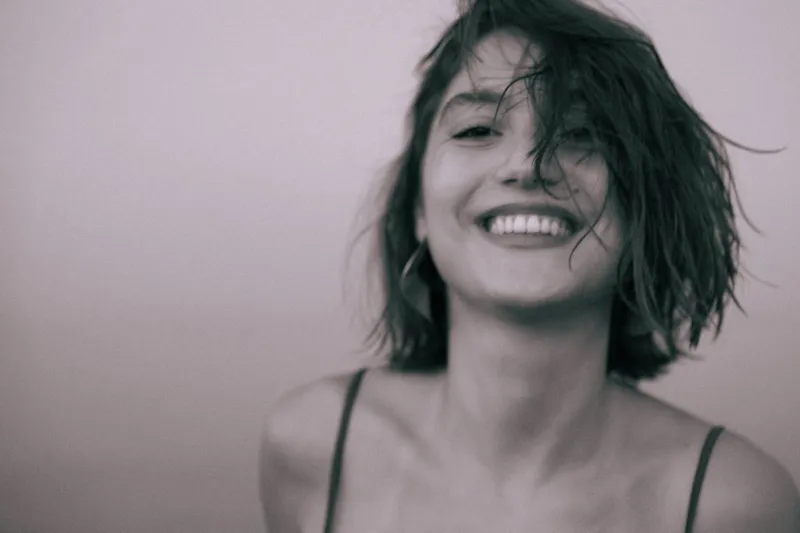
Same goes for the hair. That "I just let it air dry" texture? For a lot of us, that means a specific combination of leave-in conditioner, a diffuser on low heat, and knowing exactly which sections to scrunch and which to leave alone. The tousled wave didn't just happen. You choreographed it.
And that's not a criticism — it's a celebration. Because there's real skill in making something look easy.
Why We're So Drawn to It
The appeal of the undone aesthetic goes deeper than trends. I think it taps into something a lot of American women are genuinely hungry for right now: the appearance of ease in a culture that has historically rewarded visible effort and hustle above almost everything else.
For a long time, polish was the goal. A full face, a structured outfit, every piece in its place — that was the signal that you had it together. That you were trying. That you were serious. But somewhere along the way, "trying" started to feel exhausting to look at, not just to do. The perfectly curated grid, the flawless contour, the outfit that clearly took an hour — it all started to feel like pressure, not aspiration.
The undone look offers a different kind of aspirational message. It says: I'm confident enough not to need all of that. It communicates self-assurance, ease, and a certain groundedness. It suggests that you have a life rich enough that you can't be bothered with excessive primping — and yet you still show up looking like yourself, which happens to be lovely.
That's a powerful thing to project. And people are responding to it.
Being Intentional About Your Version of "Natural"
Here's where I want to offer you something useful, not just interesting: you are allowed to be deliberate about your undone look. In fact, that's the whole point.
The trap some people fall into is thinking that embracing this aesthetic means abandoning intention altogether — just rolling out of bed and hoping for the best. But that's not what the women who do this look really well are doing. They've figured out their version of it. They know which products work with their skin, which textures suit their hair, which silhouettes feel like them rather than like they're wearing someone else's vibe.
So if you're drawn to this direction, start there. Not with a shopping list, but with a question: What does effortless actually look like for me?
Maybe it's a great moisturizer and nothing else on your skin, because your skin genuinely looks good when it's taken care of. Maybe it's one signature piece — a perfectly broken-in leather jacket, a silk slip dress — that does all the heavy lifting. Maybe it's learning to embrace your actual hair texture instead of fighting it, which might mean a whole new set of products but ultimately less time in front of the mirror.
The goal isn't to copy someone else's version of natural. It's to invest in understanding your own.
The Craft Behind the Casualness
There's something I genuinely love about the undone aesthetic, and it's this: it rewards self-knowledge. You can't fake your way through it with a tutorial the way you might with a more technique-driven look. It asks you to know yourself — your skin, your hair, your body, your actual lifestyle — and then dress and groom accordingly.
That's not lazy. That's sophisticated.
So the next time someone tells you that you look effortless, let yourself feel the full weight of that compliment. Because it means you've done the work so well that it's invisible. You've edited, refined, and curated until what remains is something that looks exactly like you — only the very best version.
And if that takes forty-five minutes? Nobody has to know.