Your Living Room Is Speaking — Here's How to Actually Listen
Your Living Room Is Speaking — Here's How to Actually Listen
Before a single word leaves your mouth, your living room has already introduced you. The throw pillows, the gallery wall (or the conspicuous blank wall where one could be), the stack of books on the coffee table — all of it lands on your guests before you even offer them a drink. It's a full conversation happening without language, and most of us have never stopped to ask: what is my space actually saying?
I started thinking about this after a friend walked into my apartment for the first time and immediately said, "This is so you." I laughed it off, but later I kept turning it over. What did she mean? What had she read in those first few seconds? And honestly — was she right?
Turns out, interior psychology is a real thing, and it's been quietly influencing how designers, therapists, and brand strategists think about physical spaces for decades. Your home is essentially a three-dimensional mood board of your inner life. And once you know how to read it, you can't un-see it.
Color Is a Confession
Let's start with the most obvious visual cue: color. The palette of your living room isn't just an aesthetic choice — it's an emotional one, whether you made it consciously or not.
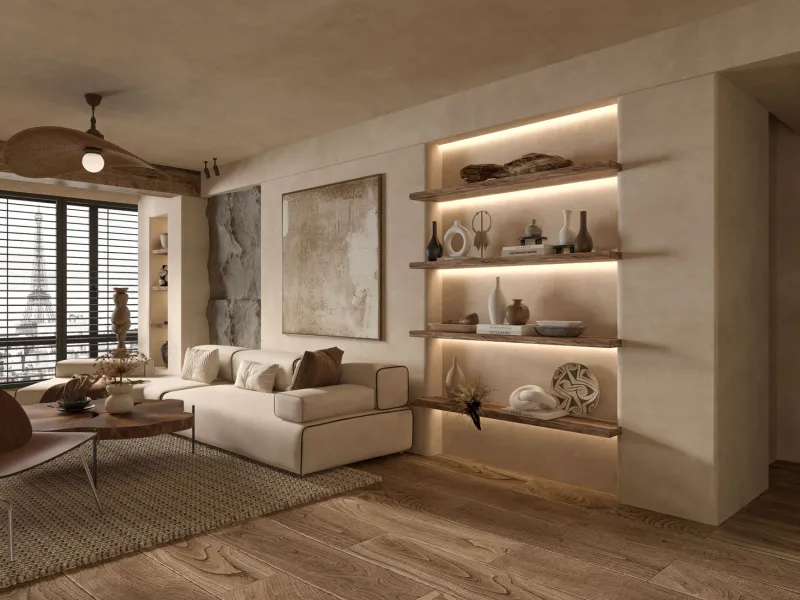
A room washed in warm neutrals — creamy whites, soft taupes, sandy beiges — tends to signal someone who craves calm, who values approachability, and who probably has strong feelings about linen. It's the visual equivalent of a deep breath. But it can also signal someone who's playing it safe, who hasn't yet committed to saying something bolder about themselves.
Deep, moody colors — a forest green accent wall, a navy velvet sofa, terracotta everything — read as confident, sensory, a little maximalist in spirit even if minimal in objects. These are spaces that say I know what I like, and they tend to belong to people who are genuinely comfortable with their own tastes.
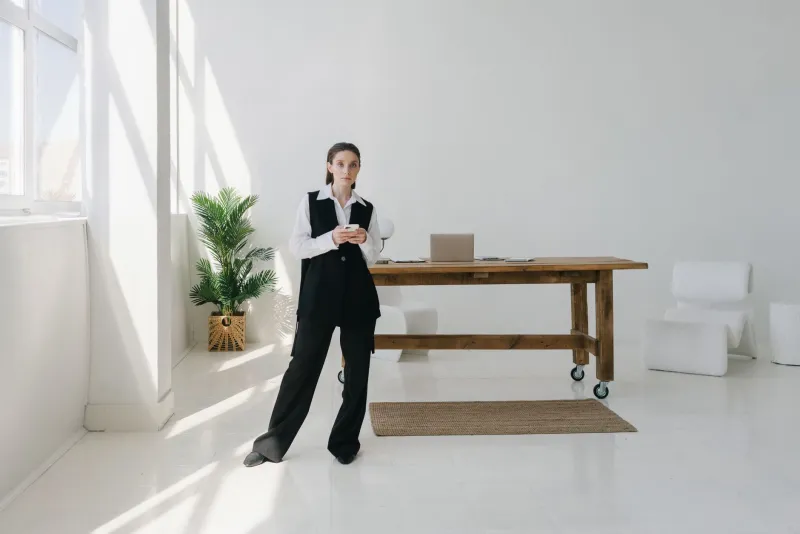
Then there's the all-white room. Pristine, intentional, a little intimidating. It often signals someone who values control and aesthetics deeply — but it can also be a kind of armor, a space that's been curated for appearance rather than lived in.
None of these are judgments. They're just conversations worth having with yourself. When you look at your living room palette, does it feel like you — or does it feel like a version of you from five years ago, or the version of you that wanted to impress someone?
Clutter Is Not the Enemy — But It Is Information
Here's where things get interesting. The clutter (or lack of it) in your space is one of the most honest things about you.
A living room that's perfectly styled but feels sterile? That's its own message — often one about anxiety, performance, or a deep need for external validation. A room that's chaotic, layered, overflowing with things? That's a message too, often about avoidance, sentiment, or simply a life being lived at full volume.
The sweet spot most people are actually going for — and rarely articulate — is curated warmth. A space that feels real and lived-in, but where every object has earned its place. Think of it like editing a personal essay: you don't include every detail of your life, just the ones that make the story richer.
So the question isn't "is my home too cluttered?" The question is: why is this object here? If you can't answer that — if something is just there out of habit or guilt or because you haven't gotten around to dealing with it — that's worth noticing.
The Sentimental Objects Are Doing Heavy Lifting
Every living room has at least one object that means something. A ceramic piece from a trip abroad. A framed photo from a specific moment. A book that changed your perspective sitting on display rather than shelved.
These objects are the most personal layer of the visual story your home tells, and they're the ones guests remember. They're conversation starters, yes — but they're also anchors. They communicate what you value, what you've experienced, who you've loved, and where you've been.
The interesting exercise is to look at your sentimental objects and ask: do these still represent me? Sometimes we keep things out of loyalty to a past version of ourselves — the person we were in college, the relationship we've since outgrown, the aspiration that's quietly shifted. And sometimes those objects deserve to be honored, not displayed.
There's no wrong answer here. But awareness is everything.
What Your Furniture Arrangement Reveals
Beyond the objects themselves, the arrangement of your furniture is quietly telegraphing how you see social connection.
A room where the sofa faces the TV and nothing else? That space prioritizes consumption over conversation. It's not a moral failing — most American living rooms are built around the screen — but it's worth acknowledging. A room arranged around a central coffee table, with seating that faces inward? That's a space designed for people, for talking, for gathering.
And then there's the lone armchair in the corner — the reading nook, the personal perch. If your living room has one, it usually belongs to someone who needs and protects their solo time, even within a shared space. That's not antisocial. That's self-knowledge.
How to Curate Your Space Like It's Part of Your Personal Brand
If your living room were a brand, what would its tagline be? Sounds a little ridiculous, but stay with me — because this reframe is genuinely useful.
Think about the impression you want to make. Not on Instagram (though sure, that too if that's your thing), but on the people who actually walk through your door. What do you want them to feel? What do you want them to understand about you within the first few minutes?
From there, audit your space through that lens. Does the color palette support that feeling? Do the objects tell the right story? Is the arrangement inviting the kind of energy you actually want in your home?
This isn't about perfection or spending money you don't have on a full redesign. It's about making deliberate choices — the same kind of intentionality you'd bring to putting together an outfit that makes you feel like yourself, or writing a bio that actually captures who you are right now.
Your home is already telling a story. The only question is whether you've written it on purpose.
Start Small, But Start
You don't have to overhaul your entire living room to shift the narrative. Start with one corner. One surface. Ask yourself what you'd put there if you were designing a space that genuinely reflected your life right now — not your aspirational life, not your past life, but the actual one you're living today.
That's where the real self-discovery happens. Not in the grand gestures, but in the small, considered choices that slowly add up to a space that feels like home in the truest sense of the word.
Because when someone walks in and says "this is so you" — you want to be able to nod and mean it.