Your Online Presence Needs the Same Edit You've Been Giving Your Wardrobe
Photo: Shixart1985, CC BY 2.0, via Wikimedia Commons
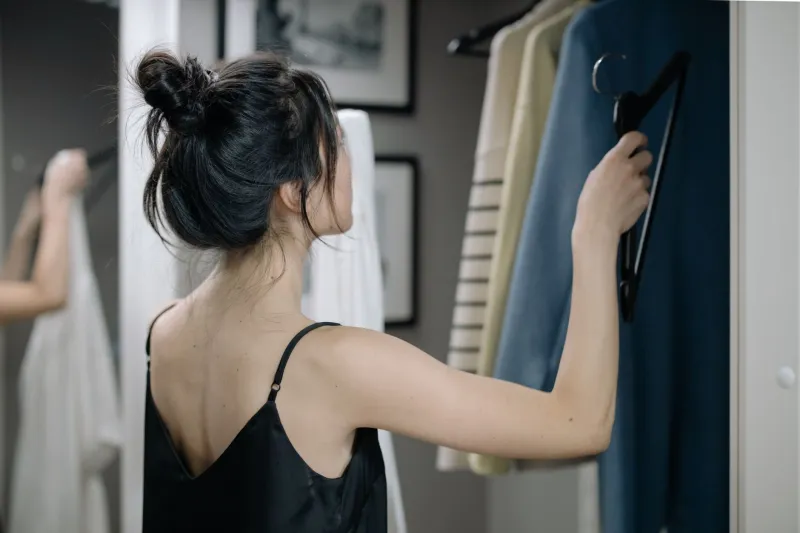
Imagine you hired a stylist — someone genuinely good at their job — and gave them full access to your closet. They'd pull out the pieces that don't fit the life you're actually living. The stuff you're keeping out of guilt, or nostalgia, or because you spent real money on it even though you haven't touched it in three years. They'd ask you hard questions about who you're dressing for and what story you're trying to tell.
Now imagine giving that same stylist access to your social media accounts, your saved posts, your following list, the content you consume at 11pm when you can't sleep. What would they find? What story would that tell?
Most of us have thought carefully about our physical wardrobes at some point. Almost none of us have applied the same rigor to our digital ones.
Your Feed Is a Wardrobe — Whether You Treat It Like One or Not
Every account you follow is something you've invited into your daily life. Every post you save, every creator you return to, every aesthetic you've been quietly absorbing — it's all shaping your visual language, your taste, your sense of what's possible for you. That's not an exaggeration. That's just how human brains work. We are profoundly influenced by what we repeatedly see.
In fashion, we talk about the concept of a "uniform" — a consistent personal style that communicates who you are without requiring you to think too hard about it each morning. Your digital presence operates the same way. What you post, how you present yourself, what you engage with — it forms a pattern. And that pattern is your online identity, whether you've consciously designed it or not.
The question isn't whether you have a digital aesthetic. You do. The question is whether it's one you actually chose.
The Saved Folder Audit
Here's a quick exercise that's more revealing than it sounds: go through your saved posts on Instagram (or TikTok, or Pinterest — wherever you do most of your collecting). Look at what you've saved over the last six months. Not the last week, when you might have been more intentional — the full six months.
What themes come up? What colors, moods, environments, types of people? Is there a consistent throughline, or does it look like five different people saved those things?
This matters because our saved content is essentially a mood board for who we want to be — or who we think we should want to be. When those two things don't match, you end up with a digital wardrobe that's just as confusing as a physical closet full of clothes that don't go together and don't really represent you.
The Follows That Don't Fit Anymore
Just like that blazer you bought for a job interview three years ago, some of the accounts you follow made sense at a specific moment in your life and just... haven't been reassessed since.
Maybe you followed a bunch of fitness accounts during a phase when you were really into a certain kind of training. Maybe you followed a home decor aesthetic that felt aspirational at the time but now feels like someone else's life. Maybe you followed people because they were popular, or because someone you admired followed them, and you've been absorbing their content on autopilot ever since.
Unfollowing is not rude. It's editing. It's the same as donating the clothes that no longer serve you — you're not erasing that they existed, you're just making room for what fits now.
What You Put Out Is the Other Half
We tend to think about digital curation in terms of what we consume, but what we post matters just as much — maybe more. Your public-facing content is your outfit. It's what people see when they look at you.
And I'm not talking about having a perfectly polished grid or a consistent color palette (though those things can be powerful if they come naturally to you). I'm talking about coherence. Does what you share feel like it comes from the same person? Does it reflect values and interests you actually hold, or is it a mix of things you posted because they seemed like they'd perform well, or because you felt like you should be sharing that kind of content?
Authenticity online doesn't mean sharing everything. It means what you do share is genuinely yours. That's a meaningful distinction.
Editing With Intention
A digital edit doesn't have to be dramatic. You don't need to delete your accounts or do a full rebrand. Here's a simple framework to start:
Audit your inputs. Spend 20 minutes going through who you follow and ask, honestly: does this account add something to my life, or does it just take up space? Unfollow freely.
Look at your saved content. Notice the patterns. If they don't reflect who you are right now, clear the folder and start fresh. Your saves should function like a personal vision board — not a graveyard of old aspirations.
Review your recent posts. Not to judge them — just to notice. Is there a thread? Is the person in those posts someone you recognize? If not, that's useful information about where the drift happened.
Define your digital uniform. What three or four words would you want someone to use to describe your online presence? Let those words guide what you post and what you engage with going forward.
Style Is Intentionality
The most stylish people — online and off — aren't necessarily the ones with the biggest budgets or the most followers. They're the ones who've made deliberate choices about what they want to communicate and then stayed consistent with it. That consistency reads as confidence. And confidence, in any context, is always in style.
Your digital presence is already speaking. It just might be time to make sure it's saying what you actually mean.